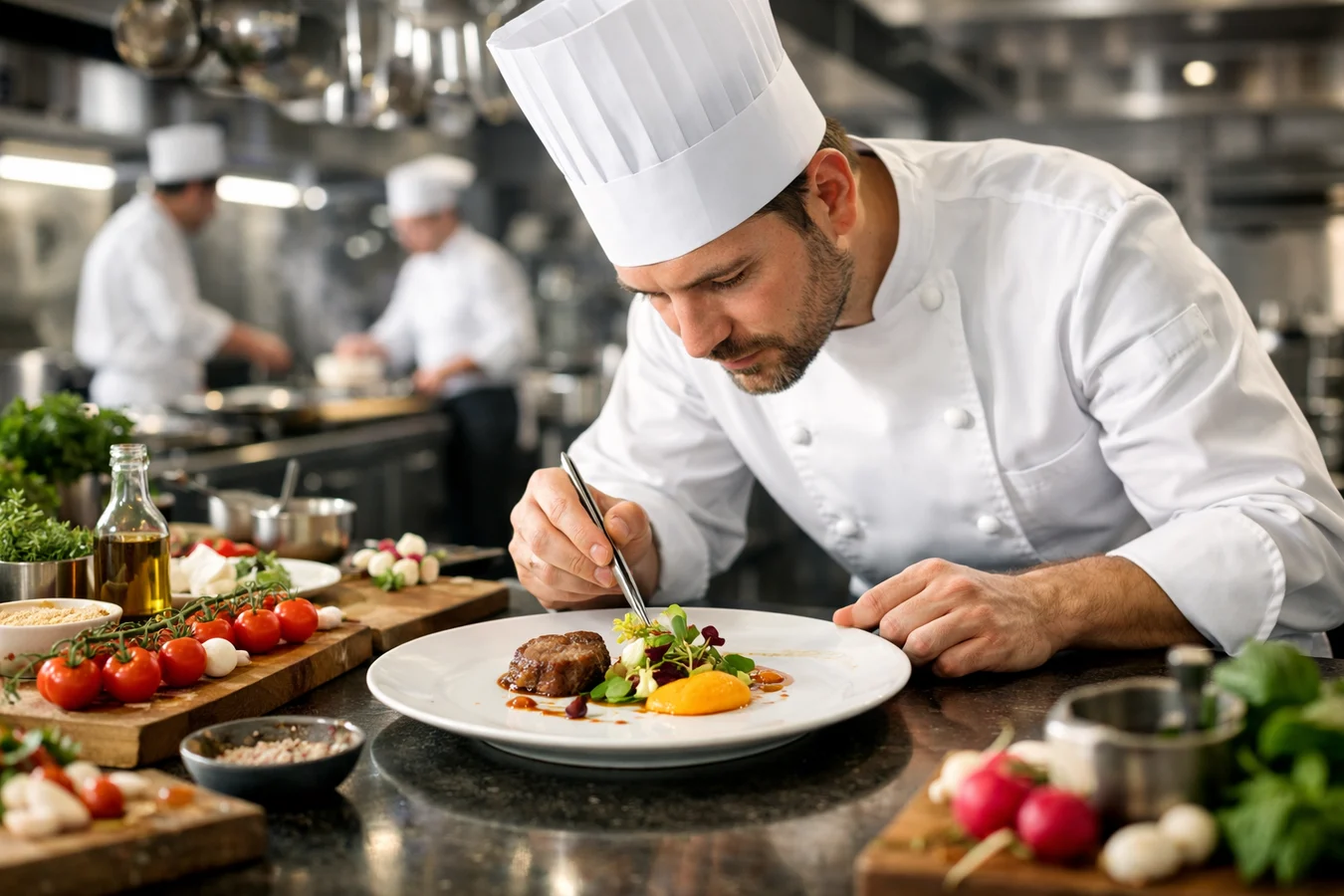
The pursuit of culinary excellence is often romanticized on television screens, but the reality behind a Michelin-starred kitchen is a relentless test of endurance, precision, and leadership. Operating at the highest echelon of gastronomy requires an obsessive commitment to detail where a single overcooked scallop or an unbalanced sauce can compromise months of rigorous preparation.
The Early Morning Sourcing and Market Run
Long before the dining room doors open to welcome guests, the executive chef’s day begins in the quiet hours of the morning. While most of the city is still asleep, the chef is often at local fish markets, organic farms, or specialty purveyors inspecting produce.
-
Quality Control: Every ingredient must meet strict specifications, from the marbling of the meat to the exact firmness of fresh sea urchin.
-
Relationship Building: Directly communicating with farmers and fishermen ensures first access to seasonal harvests and rare, premium ingredients.
-
Menu Adaptation: Because fine dining relies entirely on seasonal availability, the morning sourcing trip frequently dictates last-minute modifications to the evening menu tasting notes.
The Midday Kitchen Arrival and Prep Marathon
Arriving at the restaurant by mid-morning, the executive chef transitions immediately from external sourcing to internal management. The kitchen is quiet, but this stillness is deceptive because a massive wave of preparation is about to begin.
-
Line Briefing: The chef gathers the brigade to review daily reservations, VIP dietary restrictions, and any newly updated plate compositions.
-
Tasting and Adjusting: Every sauce, purée, and infusion prepared by the junior cooks must be tasted by the chef. Adjustments to salt, acidity, and texture are made continuously.
-
Equipment Maintenance: Ensuring that expensive tools, immersion circulators, and specialized ovens are functioning at peak performance is vital before service begins.
The Intensity of Service Time
When service starts, the atmosphere inside the kitchen shifts dramatically. The calm focus of the afternoon transforms into a high-octane symphony of synchronized movements, shouted orders, and intense concentration.
-
The Pass: The executive chef stands at the pass, which is the physical counter where every completed plate must be inspected before it goes to the dining room.
-
Quality Assurance: If a plate does not meet the exact visual and flavor standards of a Michelin-starred establishment, the chef rejects it instantly, forcing the station cook to restart from scratch under immense time pressure.
-
Pacing the Meal: The chef coordinates the timing between the cold station, hot line, and pastry department to ensure that tables receive their courses simultaneously without long delays.
Post-Service Debrief and Administrative Duties
The final guest departs late in the evening, but the executive chef’s responsibilities do not end when the last plate is washed. The late-night hours are dedicated to administrative burdens that keep the business operational.
-
Inventory Management: Calculating food waste, logging usage rates, and placing emergency orders for the following day.
-
Financial Oversight: Reviewing labor costs, food cost percentages, and profit margins with the restaurant general manager.
-
Creative Development: Spending quiet time sketching new dish concepts, experimenting with flavor pairings, and planning future seasonal menu rollouts.
Frequently Asked Questions
How many hours does a Michelin-starred executive chef typically work in a week?
It is common for an executive chef at this level to work between eighty and one hundred hours per week, often arriving before dawn and leaving long after midnight.
Does the executive chef still cook individual dishes during service?
While the chef handles the occasional critical component or demonstrates techniques during prep, their primary role during service is quality control at the pass rather than cooking individual line stations.
How does a restaurant maintain its Michelin star year after year?
Consistency is the most critical factor. Inspectors can visit at any time, so the kitchen must execute every single dish with the exact same level of precision, regardless of whether it is a Tuesday evening or a Saturday night.
What is a culinary brigade system?
The brigade system is a hierarchical kitchen organization structure introduced by Auguste Escoffier, where specific roles such as saucier, rotisseur, and pastry chef report directly to the executive chef and sous chef.
How do executive chefs handle intense kitchen stress?
Most successful chefs rely on rigorous physical organization, mental discipline, clear communication with their team, and a deep passion for the culinary arts to push through the grueling hours.
What training or background is necessary to reach this level?
Most Michelin-starred chefs spend decades working their way up through various kitchen stations, often attending formal culinary schools and staging in internationally renowned restaurants across the globe.
Why are ingredients so expensive in fine dining establishments?
Fine dining relies on hyper-localized, sustainably sourced, rare, and labor-intensive ingredients that require meticulous handling and specialized transport to preserve their peak flavor profile.