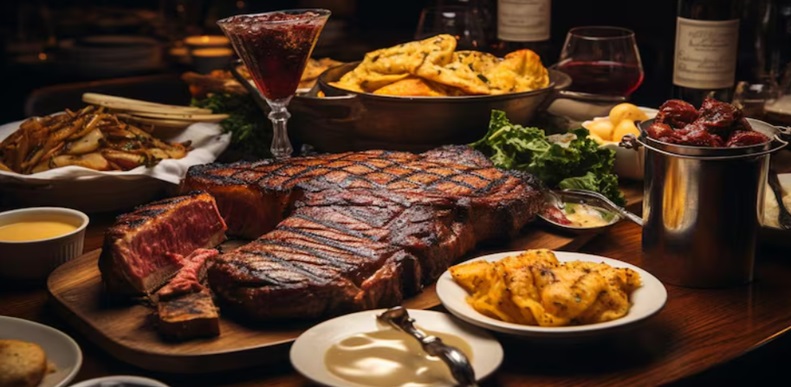
When people hear steakhouse, they have certain expectations. Big cuts. Sides that are heavy. Slowing down your evening with a meal. FORTU Restaurants serve beautiful steaks. But the spirit of our food is something else. We use Japanese techniques to create food that is balanced, clear, and full of flavors. It’s still delicious. You will feel light and want to go for a walk or dessert afterward.
I remember the very first time that we served a ribeye topped with a yuzu glaze, shaved red radish and a bright yellow sauce. Someone in the kitchen commented that it was almost too simple. We tasted it. The char sang. Citrus lifted the fat. Radish adds snap. It clicked. We are now in the same lane. Respect for quality beef is guided by restraint, curiosity and respect.
Technique First, Portion Second
Focus is key to Japanese cuisine. Heat control. Knife work. Timing. Every day, we bring these habits to the grill or saute station. We don’t load a plate with food to show off, but to show that we care. The steak is sear-grilled to lock in the juices without being beaten. Slowly reduced tare adds umami layers rather than just sweetness. The salt is always present but not loud. It almost sounds minimal. It could be. It’s about getting you to the point where acidity, salt, and meat all feel like they go together.
You may notice that the cuts are smaller than those at a traditional steakhouse. The cuts are not tiny but just the right size. Perfectly trimmed strips with a miso butter finish. Tenderloins brushed with mirin and soy, which caramelize to a glossy edge. These are served with side dishes that will refresh you rather than make you feel heavy. Shishito peppers charred with sea salt. Cucumber salad with crunch and a cool taste. Pickled vegetables to bring your palate back into focus. After a few bites, it becomes a new rhythm.
The Flavor Map
Umami is our north star. With a few of our favorite tools, we can get there. Miso gives glazes and compound butters depth. Katsuobushi adds a smokey backbone to vegetables and broths. Kombu adds a quiet richness to stocks. Even soy sauce, a simple condiment, can be transformed by the way we use it. Spraying lightly before grilling is one thing. Soy gently warmed with citrus is another. It’s part of the fun, I think. The smallest choices can make a big difference.
Texture is also important. We give contrasts to beef because it has its own structure. Crisp lotus chips on a steak-tartare. Sprinkle toasted sesame over a strip of loin to give it a nutty kick. The shaved scallion looks like a garnish, but is actually an essential. This is not fussy at all. It’s just delicious.
Balance on the Plate
The plate should be like a short conversation. Rich meets brilliant. Hot meets cool. Soft meets crispy. You will see pickles or citrus next to beef. Yuzu, sudachi, even a clean ponzu. They stimulate the palate. You can also see details that are sometimes hidden by heavy sauces. You don’t need to cover the center if it is properly cooked. You want to display it.
The same principle applies to portioning. We direct guests to a sequence, rather than one showpiece. Start with something cool or raw. Start with something raw or cool, like a noodle salad or a sashimi starter. Then, move on to something warm and shareable like karaage (fried chicken) or smoky grilled eggplant. Next, the steak is sliced to make it easy to share, and served with some sides that will reset your taste buds. The meal leaves you feeling satisfied, but also strangely energized. It’s a good feeling. This feeling is inviting.
How to Treat the Steaks You Love!
Rotate cuts according to what tastes best. When the fat is sweet and clean, we prefer a marbled ribeye. When the aging process is in full swing, a leaner cut of beef. We sometimes bring in American Wagyu as a special. However, we still treat it gently. Heat that is kissing, but not intimidating, will produce high marbling. After a quick sear and a short rest, brush on a tare to make it stick like a memory. The slices are fanned to create air between them. It looks nice, and it keeps the crust from steaming.
The seasoning of food is intentional. To set the texture, we cure some steaks with salt. Some steaks are treated with a miso-based rub, which is then wiped off and grilled. The caramel flavor remains. The timing of the citrus juice might be the difference between the pass and the squeeze. Japanese culture shapes the plate through these small decisions, without it becoming a theme dish.
Sides with a Purpose
Steakhouses often treat sides like indulgent sideshows. We consider them co-stars. Vegetables can be charred, pickled or lightly dressed to cut through the richness. Rice appears in different forms. It can be simple and perfect. It can be a crispy rice cake to catch the drippings of the steak. Also, noodles are served. Warm dashi in a bowl can help you reset before your last bite.
Sauces are quiet. Wasabi is floral, not fiery. Citrus-soy sauce that’s glossy, thin and almost mirror-like. Sesame dressing that sticks without screaming. With each bite, you should be able choose the path that you want to take. Create your own balance. You are the one who decides what you will eat.
Service that guides, not pushes
The team at FORTU Restaurants enjoys reading the table. You may want guidance or just to take your time. We will recommend an order that is in line with the design of the menu. From light to rich. Fresh to charred. We slice and arrange the food so that you can easily reach it if you’re sharing. This way, you won’t lose your conversation when negotiating plates. We give quick notes when a dish is in need of a note. For example, how to mix the ponzu and the steak. Then we step back. No performance. No performance.
A dining room that matches the food
Ambience is more important than first thought. The room should be calm and warm with the music playing but not too loud. Plates look considered. Plates look well-considered. Colors come from ingredients. Deep pink beef. Jade cucumbers Golden char. The experience is cohesive when the aesthetics and the food are in harmony. It is not something you think about much. That’s probably the point.
Even if we serve steak, it is not a steakhouse.
We would not be able to fulfill our promises if we called ourselves a steakhouse. We don’t chase after size or “one-and-done” plates. Balance is our identity, inspired by Japanese culture. We love the canvas of the steak. Some nights guests create meals without any beef and come away glowing. Other nights, the table will share a ribeye and nod quietly after the fourth piece because the citrus helps to keep the richness light. Both outcomes are acceptable.
You can learn a lot from this. Not volume. Not spectacle. Our menu is full of familiar comforts, but with a lighter touch and a more sharp knife. FORTU Restaurants can be summed up in one sentence. Always put flavor first.
FAQ
Do you share large steaks?
We do offer shareable cuts. However, we cut them and present them to make it easy for people to pass. Focus is placed on balance and perfect cooking rather than sheer size.
Is all Japanese food Japanese?
Not strictly. Not strictly. To guide our seasoning, texture and plating, we use Japanese techniques, ingredients and sensibilities. The result is modern and fresh, not heavy or traditional.
What classic steakhouse side dishes are available?
There are still comforting ingredients, but they will be lighter. You can use charred vegetables and salads with simple rice. Clean sauces will brighten the dish rather than cover it.
What is your wagyu offering?
We all indulge in a little bit of luxury. We recommend that you eat smaller portions and enjoy the richness of the food without feeling fatigued. You can ask your server for tonight’s menu.
What happens if I have a guest who does not like beef?
No problem. Many guests create full meals using seafood, vegetables and small plates. We are happy to help you create a satisfying meal.
What should I order in order to get the best experience?
Start lightly, progress to charred and richness. Finish bright. Start with a cool starter, then a warm shareable dish, a steak that you can split and some clean sides. The flavors are arranged in a simple way that feels intentional.
FORTU Restaurants is a great place to spend a special evening out?
It is a great place for a formal evening, but it also works well for a casual one. The atmosphere is relaxed and the food is delicious without being too heavy. Service is also available when needed. This balance was designed.
This post was written by a professional at Fortu. Fortu stands out among the top Restaurants St Petersburg FL, offering an elevated Pan-Asian dining experience in the heart of St. Petersburg, Florida. Celebrating Asia’s vibrant and diverse culture, Fortu introduces bright and bold flavors to a bright and bold city with a menu of locally and sustainably sourced options, from small bites to hearty delicacies. Whether winding down from a beach day or celebrating a special occasion, guests can enjoy a lush, alluring atmosphere and an authentic taste of Asia’s divine cuisine at one of the finest Best Restaurants Downtown St Petersburg.