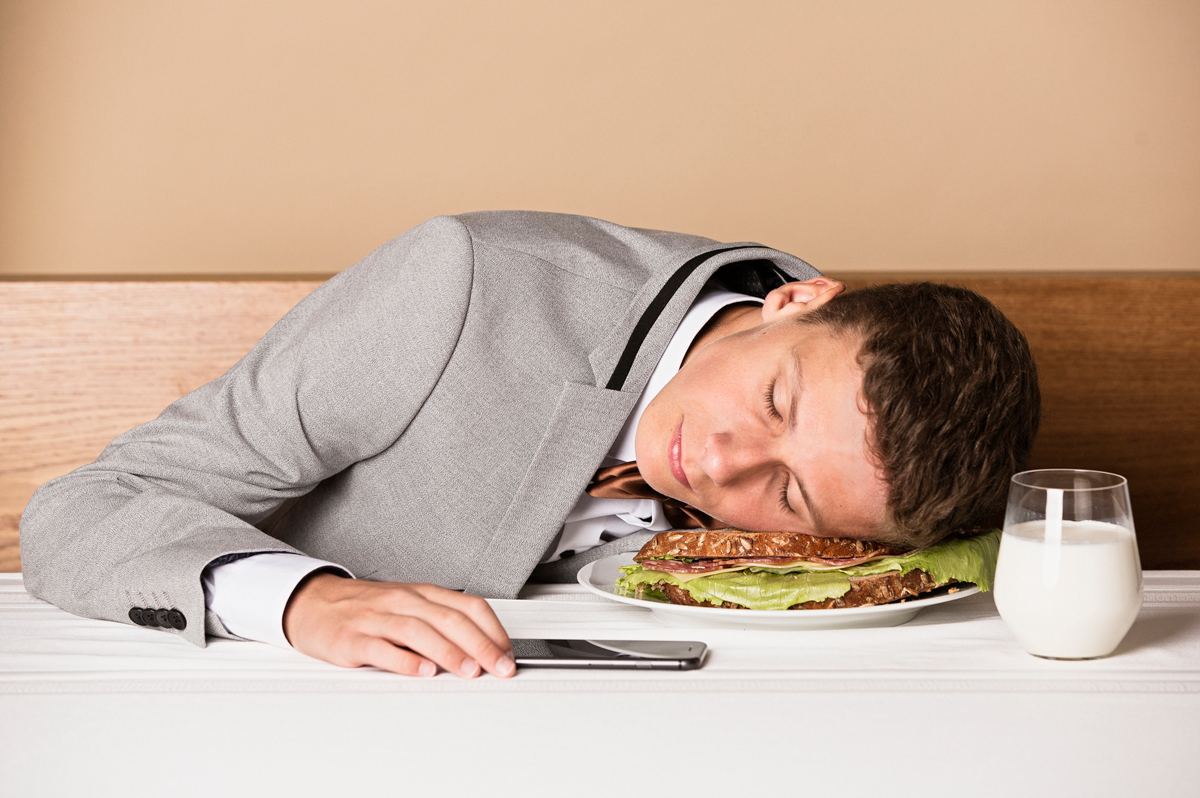
We’ve all seen the famous scenario where our Grandpa Harry falls asleep immediately after eating a big meal. After all, as we get older, frequent naps throughout the day are not uncommon—especially after eating. However, if you’re hardly nearing the age of 80, constant tiredness after eating can be alarming.
It may be a sign that something else is going on—perhaps even an underlying health problem. If you feel exhausted after every meal, then here are some potential reasons you might want to consider.
Your Meal Was High in Sugar
Foods that are high in refined sugar can lead to a glucose spike and, consequently, a crash. After eating, your body releases insulin to help absorb the glucose from that food. This can trigger the release of more tryptophan in the brain, which leads to an increased production of serotonin and melatonin—two neurochemicals that promote sleepiness.
As a result, you may find yourself in a very relaxed and exhausted state. This is why it’s important that you eat balanced meals with a proportionate amount of carbs, fats, and protein. This will help keep your blood sugar more stable and avoid dips in energy.
You Overeat
Large meals require a higher amount of energy to digest. So, in theory, the more you eat, the more exhausted you’ll be as a physiological response. If you want to avoid feeling sluggish, it’s important that you are conscious about how much you eat at once.
If you eat a more reasonably sized meal, your digestive system won’t be overstrained, and your blood flow can focus on traveling to areas like your brain and muscles, rather than simply your stomach. Smaller, frequent meals throughout the day are the way to go to avoid that afternoon fatigue.
Dehydration
Believe it or not, dehydration can reduce your blood volume, which can cause your heart to have to work even harder. As a result, you can find yourself much more tired—physically and mentally. The simple act of sipping water throughout the day can make a significant difference in your energy levels, which may just convince you to reach for a glass of water instead of a coffee next time. Beyond giving you more energy, water has numerous other benefits, so drinking more water is never a bad thing. If water is not really your thing, consider adding a zest of cucumber or lemon juice to make the flavor a little more interesting.
Underlying Health Issue
In some cases, it may be a matter of an underlying health condition. Persistent fatigue may be linked to a serious health condition like insulin resistance, a sleep disorder, or even chronic fatigue syndrome.
It’s certainly something you should talk to your doctor about if you suspect it’s none of the above potential reasons. A healthcare professional can help narrow down the cause by carrying out blood tests and evaluations to determine where it’s coming from.